Tranzission

Search
Close this search box.
AI Certificate Program for Insolvency Practice | Tranzission
Certificate Program · Virtual & Hands-on

AI Certificate Program for Insolvency Practice

Learn to use AI confidently for Professional Research, Drafting, Analysis, Compliance & Productivity

Designed for Insolvency Professionals, Advocates, Chartered Accountants, Company Secretaries, Bankers, CoC Members, Consultants & Finance Professionals

Dates 18–20 Sep 2026
Timing 5–8 PM Each day
Format Virtual Hands-on learning
Program Fee ₹4,000 ₹5,500 Limited-time offer
AI Certificate Program for Insolvency Practice 18th–20th September 5 PM to 8 PM each day 9 Hours Virtual & Hands-on No prior AI knowledge required AI Certificate Program for Insolvency Practice 18th–20th September 5 PM to 8 PM each day 9 Hours Virtual & Hands-on No prior AI knowledge required
The Program Philosophy

The objective is not simply to teach how AI works.

It is to help professionals use AI effectively, critically and responsibly.

Apply it to research, documents, analysis and drafting — then verify outputs and exercise sound professional judgment.

Reserve Your Seat
1

Understand AI

Capabilities, limitations, leading tools — and where AI can add value.

2

Prompt & Work with AI

Structure effective instructions, then apply AI to research, documents and drafting.

3

Verify & Use Responsibly

Confidentiality, verification, and professional judgment before you rely on any output.

1 Understand AI
2 Prompt AI
3 Work with AI
4 Verify AI
5 Use AI Responsibly
Program Objective

Knowing where AI adds value is not the same as using it well

“I asked ChatGPT a question.”
“The answer looked confident.”
“I am not sure I can rely on it.”
“I don’t know which tool to use.”

AI is rapidly becoming a powerful tool for professional productivity. Real value, however, comes from knowing where AI can add value, how to work with it effectively, and how to exercise sound professional judgment. This Certificate Program takes participants from foundational AI literacy to confident, practical use — with the emphasis throughout on learning by doing.

Who Should Attend

Built for working professionals

For professionals who want to understand and start using AI effectively in their professional work. No prior knowledge of AI or technology is required.

Legal & Insolvency

Practice-ready AI use

  • Insolvency Professionals
  • Advocates
  • Legal Consultants

Finance & Governance

Research, drafting, analysis

  • Chartered Accountants
  • Company Secretaries
  • Cost Accountants
  • Bankers
  • Finance Professionals
  • CoC Members

Why This Fits

Start using AI from tomorrow

  • No technical background needed
  • Virtual demonstrations and prompt labs
  • Confidentiality and verification covered
  • Identify 5–10 tasks where AI can create immediate value
What Participants Take Away

After nine hours, you will be able to

Walk out able to select the right tool, structure effective instructions, work with complex documents, and apply verification, confidentiality and professional judgment.

9 hrsVirtual & Hands-on
6Focused Sessions
0Tech Prerequisites
Reserve Your Seat
Understand the capabilities and limitations of AI
Select appropriate AI tools and approaches for professional tasks
Structure effective AI instructions
Research, analyse and work with complex information and documents
Draft, refine and review professional content
Develop repeatable AI workflows for routine work
Apply verification, confidentiality and professional judgment
Your Three-Day Journey

Nine hours. Six sessions.
One professional workflow.

01

Understand AI

Foundations, leading tools, and prompting for professional impact — without the jargon.

02

Work with AI

Research, documents, drafting, and advanced techniques for everyday professional work.

03

Use AI Responsibly

Trustworthy use, professional judgment, and an integrated workshop from research to final output.

Curriculum

Session-by-session learning plan

Session 01

AI Without the Jargon: Foundations and Tools

Session 02

Prompting for Professional Impact

Takeaway: understand the fundamentals of AI, its capabilities and limitations, the leading AI tools, and how to communicate with AI effectively for professional work.
Session 03

AI for Research, Documents and Professional Work

Session 04

Advanced AI Practices for Professional Work

Takeaway: practical ways to use AI for research, document analysis, drafting, and improving the quality and efficiency of everyday professional work.
Session 05

Responsible and Trustworthy Use of AI

Session 06

The AI Professional: Integrated Workshop

Takeaway: use AI effectively, critically and responsibly — and leave with a personal action list for Monday morning.
The AI Toolbox

Tools you will actually use

A practical introduction so you know which tool to pick for which professional task.

ChatGPTDrafting, analysis and everyday work
GeminiResearch, documents and Google workflow
ClaudeLong documents and careful reasoning
CopilotWord, Excel, Outlook and Teams
PerplexityResearch-oriented answers with sources
Prompting for Professional Impact

From questions to effective AI instructions

Participants learn how to structure instructions so AI produces usable professional output.

Context & purpose
Role & perspective
Task & outcome
Facts & sources
Constraints
Audience & tone
Format & output
Verification
Meet Your Faculty

Learn AI the way professionals actually work.

This is not a technology course. It is a professional skills program — taught so participants can use AI effectively, critically and responsibly in insolvency, law, finance and advisory work, with virtual demonstrations and hands-on labs.
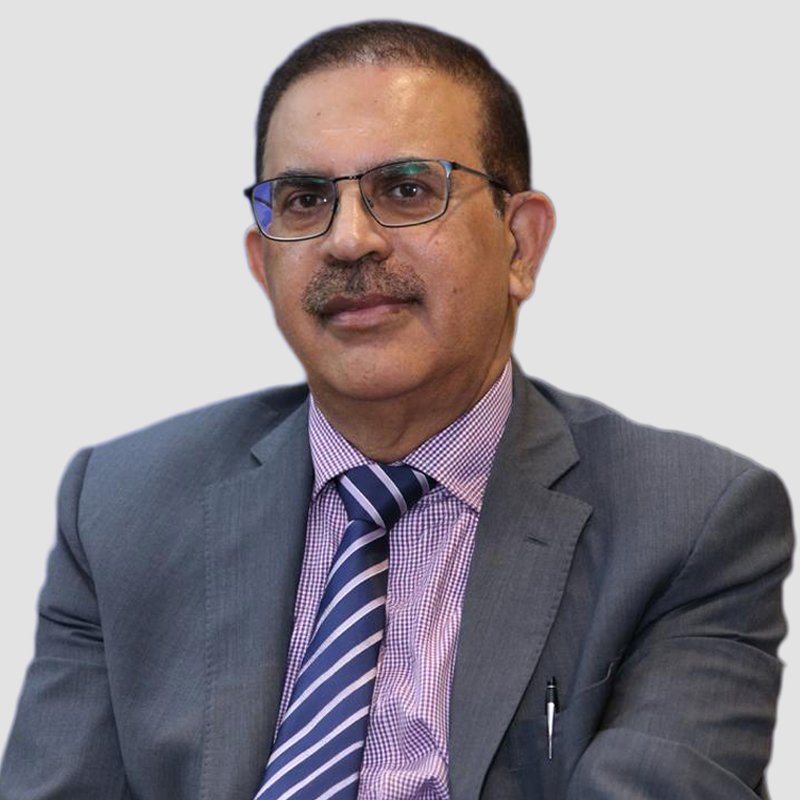
Dr. Ashish Makhija
Practice Faculty

Dr. Ashish Makhija

Advocate • Insolvency Professional • CA • Author

Teaches AI the way insolvency, law and finance professionals actually work — with judgment, verification and responsible use at the centre.

16+Books Authored
2500+Professionals Trained
SC / NCLATActive Court Practice
  • Faculty to ICAI, ICSI, ICMAI & IICA
  • Designed for IPs, Advocates, CAs, CSs, Cost Accountants and Bankers
  • Emphasis throughout: learning by doing
Ms. Shital Rai
AI Faculty

Ms. Shital Rai

Master Trainer • AI Engineer • Technology Professional

Teaches AI, prompting and Microsoft technologies from practitioner experience — including mission-critical software work in Washington DC.

25+Years in Technology
10,500+Professionals Trained
10L+Learners Impacted
  • Director, Cyberlearning India — national Microsoft programmes across 19 states
  • Team Lead, U.S. Department of Agriculture contractor, Washington DC
  • Microsoft AI-102, AI-900, AZ-900, DP-900, SC-900 & AWS Certified
Why Tranzission

Trusted by professionals across India

01

Learning by Doing

Virtual demonstrations, prompt labs and a full professional assignment — not slide-only theory.

02

Profession-first AI

Research, drafting, document analysis and verification — taught for legal and finance practice.

03

Responsible by Design

Confidentiality, hallucinations, fabricated citations and human oversight are part of the curriculum — not an afterthought.

From literacy to confident use.

Nine hours. Virtual. Hands-on. Applied.

Understand AI. Prompt AI. Work with AI. Verify AI. Use AI responsibly. Leave with 5–10 tasks from your own practice where AI can create immediate value.

Your journey includes
  • 18th–20th September 2026
  • 5 PM to 8 PM each day
  • Prompt Lab & Virtual Demonstrations
  • Document, Research & Drafting Practice
  • Certificate Program

Includes

6 Virtual Sessions Hands-on Labs Guidance by expert faculty Responsible AI Module Certificate of Participation

Frequently asked questions

Quick answers about format, who this is for, and what you will be able to do afterwards.

Do I need prior knowledge of AI or technology?
No. This is a Certificate Program. No prior knowledge of AI or technology is required. It takes participants from foundational AI literacy to confident, practical use.
How long is the Program?
18th to 20th September, 5 PM to 8 PM each day. Three days, three hours daily — nine hours in total. The sessions are virtual and hands-on.
Who should attend?
Insolvency Professionals, Advocates, Chartered Accountants, Company Secretaries, Cost Accountants, Bankers, Finance Professionals, Consultants and other professionals who want to start using AI effectively in their work.
Is this a coding or technology course?
No. The objective is not simply to teach how AI works. It is to help professionals use AI effectively, critically and responsibly — prompting, research, documents, drafting, verification and professional judgment.
Which AI tools are covered?
ChatGPT, Gemini, Claude, Microsoft Copilot, Perplexity and other research-oriented tools, including free versus paid versions and which tool to use for which task.
Will we work with real professional documents?
Yes. Day 2 includes uploading and analysing documents, extracting information, comparing material, drafting professional outputs, and refining drafts. Day 3 closes with an integrated workshop covering research through to verified final output.
Is confidentiality and professional responsibility covered?
Yes. Session 5 is a dedicated module on responsible and trustworthy AI: confidentiality, privilege, what should not be shared, hallucinations, fabricated citations, verification, bias, copyright, human oversight and organisational principles.
What will I be able to do after the Program?
Understand the capabilities and limitations of AI; select appropriate tools; structure effective instructions; research, analyse and work with complex documents; draft, refine and review professional content; develop repeatable workflows; and apply verification, confidentiality and professional judgment.

Terms & disclaimer

Program policies and important limitations before you enrol.

Terms & conditions

  • The amount paid for the program is non-refundable.
  • Participants are required to attend sessions according to the provided calendar schedule.
  • Requests for changes in class days or times will not be accommodated.
  • Failure to attend any session will not entitle the participant to a refund or subsequent batch access.

Disclaimers

  • This is a professional skills Certificate Program. It does not certify technical AI engineering competence.
  • AI outputs can be incomplete, biased or incorrect. Participants remain responsible for verifying facts, calculations, citations and professional advice.
  • The program does not replace independent professional judgment or regulatory obligations.
  • All materials are proprietary and must not be shared, copied, or reproduced without permission.
  • Brand names used in this program belong to their respective owners and are used for identification purposes only. No affiliation or endorsement is implied.
Collaborators

Resource Partners

© 2026 Tranzission • AI Certificate Program for Insolvency Practice. All Rights Reserved.
  1. Classic Transformers Private Limited (Corporate Debtor or CD) was incorporated in 1985. It is classified as Non-Government company and it has its registered office in Ahmedabad. It has one manufacturing unit in Talegaon district in Pune, Maharashtra and a principal office in New Delhi. As per records of MCA, its authorized share capital and paid-up share capital is Rs. 200 lacs. It carries on the business of manufacture of television and radio transmitters and wireless apparatus. The directors of Classic Transformers Private Limited are Mr. Paras Singhania and Mr. Raman Nair.
  2. One of the operational creditors, Best Tradex Private Limited filed an application for initiating corporate insolvency resolution process of Classic Transformers Private Limited for non-payment of its dues to the tune of Rs. 1.30 crores. The Adjudicating Authority, after issuing notice to the CD passes an order of admission on 30th August, 2023. Mr. Rajiv Khosla was appointed as Interim Resolution Professional (IRP)on the same date. In its first meeting held on 10th October, 2023, committee of creditors appointed Ms. Anamika Rajendran as Resolution Professional (RP) in place of Mr. Rajiv Khosla.
  3. IRP had made a public announcement in Form A on 1st September, 2023 in two newspapers (one english language newspaper and one regional language newspaper) in english language circulating at the location of the registered office of the company and in Pune, as the IRP felt that the CD conducts material business operations from Pune also. It was also published on the website of CD and website designated by IBBI. The last date for submission was stated as 13th September, 2023. Mr. Rajiv Khosla incurred Rs. 80,000/- as cost of publishing. The committee of creditors ratified the expense on publication to the tune of Rs. 50,000/- in its first meeting. IRP has filed application (IA 510 of 2023) against CoC and Best Tradex Pvt Ltd. for payment of remaining publication expenses.
  4. The following claims were received and admitted by Mr. Rajiv Khosla, IRP and later on by Ms. Anamika Rajendran, RP :

S. No.

Name

Amount

Status

Date of

Admission/Rejection

1.

Janta Bank

3.60 crores

Financial Creditor

20.9.2023

2.

Parivaar Bank

3.00 crores

Financial Creditor

20.9.2023

3.

Rashi Singhania(wife of Paras

Singhania)

50 Lakhs

Financial Creditor

20.9.2023

4.

Best Tradex

1.60 crores

Operational Creditor

20.9.2023

5.

Electrolux

Supplies Inc

45 lacs


Rejected as filed late

18.12.2023

6.

70 workmen

1.60 crores

Operational creditors

20.9.2023

7.

15 Employees

1.50 crores

Operational creditors

20.9.2023

8.

GST dues

70 lacs

Operational creditors

20.9.2023

9.

Income Tax dues

30 lacs

Operational creditors

20.9.2023

10.

Provident Fund Dues

20 lacs

Operational creditors

20.9.2023

11.

Revive Finance(filed on 4th

September, 2023)

1.50 crores

Financial Creditor

10.12.2023

12.

Raman Nair (Loan to company

without interest)

1 crore

Financial Creditor

20.9.2023

13.

Electricity dues

25 lacs

Operational Creditor

20.9.2023

14.

Big Lease -Landlord forarrears of Rent onlease of Principal

Office

10 lacs

Financial Creditor

20.9.2023

  1. The break-up of claims admitted till date is as under :

Financial Creditors         – Rs. 9.70 crores

Operational Creditors – Rs. 6.15 crores

 Total                               Rs. 15.85 crores

  1. The committee of creditors was constituted by IRP as follows:
  2. Janta Bank
  3. Parivaar Bank
  4. Revive Finance
  5. Big Lease
  6. According to IRP, though Raman Nair is a financial creditor but being a suspended director, he is not part of committee of creditors. IRP had written to all operational creditors to select one of their representatives to participate in the meeting of committee of creditors but despite sending 3 emails, the operational creditors collectively have not named a single representative. 
  7. IRP and RP invited suspended directors Paras Singhania and Raman Nair to attend meeting of committee of creditors by sending them notices of all committee of creditors meetings. Three meetings of committee of creditors were held until 12th December, 2023.
  8. One of the operational creditors Electrolux Supplies Inc based in New Delhi files its claim on 15th December, 2023 with the RP for Rs. 45 lacs. After receiving the claim RP writes e-mail to Electrolux Supplies Inc. that its claim cannot be considered as it has been filed after the time limit mentioned in the Code read with CIRP Regulations though the books of account also show that Rs. 45 lacs is due to Electrolux Supplies Inc. Based on legal advice, Electrolux Supplies Inc files an application (IA 810 of 2023)  under section 60(5) before Adjudicating Authority against rejection of the claim on the ground that the delay occurred on the following grounds: 
  9. Electrolux Supplies Inc was not aware of the initiation of CIRP against the CD as it is based in Gurugram (adjacent to New Delhi) and the public announcement was not made in newspapers circulating in New Delhi. 
  10. RP should have admitted the claim of Electrolux Supplies Inc on the basis of books of account and it was not necessary for Electrolux Supplies Inc. to file its claim.
  11. Best Tradex has also filed an application (IA 633 of 2023) before Adjudicating Authority that they have not been included in committee of creditors in terms of section 21 and 24 of the Code. RP’s stand is that since individually the operational creditor’s claim is not more than 10% of the total dues, IRP or RP was under no obligation to send notice of committee of creditors meeting to operational creditors. Best Tradex, while reiterating that since total claims of OC’s is more than 10%, being a largest OC, it is entitled to participate in committee of creditors.
  12. Revive Finance, whose claim was admitted after more than 3 months of its filing, moved an application (IA 754 of 2023) to the Adjudicating Authority stating that the  decisions taken in all three meetings of committee of creditors held before they were included in committee of creditors as invalid. In these 3 meetings, they claimed, crucial decisions were taken relating to appointment of RP, ratification of expenses, appointment of valuers, approval of fees of RP and other crucial decisions relating to running of CD as a going concern. Thy also claimed that unnecessary queries were raised by IRP/RP to delay the admission of claim. On behalf of RP, it was stated that 3 emails were sent as documents filed by them are deficient, they did not submit loan agreement despite repeated emails.
  13. On 1st January, 2024, the promoters of Classic Transformers Private Limited entered  into a settlement with the Applicant Best Tradex and agreed to pay all their dues in exchange of Best Tradex filing an application for withdrawal of corporate insolvency resolution process. The promoters of the CD have filed an application (IA No. 17 of 2024) to Adjudicating Authority for withdrawal on 15th January, 2024 on the basis that their claims have been paid by the promoters in full and final.
  14. The books of account of the CD shows that loan of Rs. 1 crore was taken from Raman Nair in 2018 and is still outstanding. Another account “Advance to Raman Nair” appeared in the books of account and the last 2 financial years, 2021-22 and 2022-23 showed the following transactions:

Date

Particulars

Debit

Credit

Balance

1.4.2021

Opening Balance (Payable by Raman Nair)


20,00,000

15.5.2021

Expense Adjustment/Received by CD


5,00,000

15,00,000

17.8.2021

Paid by CD

7,00,000


22,00,000

20.12.2021

Paid by CD

2,00,000


24,00,000

12.4.2022

Expense Adjustment/Received by CD


3,00,000

21,00,000

18.9.2022

Paid by CD

1,00,000


22,00,000

2.1.2023

Expense Adjustment/Received by CD


5,00,000

17,00,000

28.8.2023

Paid by CD

6,00,000


23,00,000

RP has filed an application with the Adjudicating Authority (IA 25 of 2024) on 20th January 2024 claiming Rs 31 lacs (amount outstanding as on 30.8.2021 plus amounts paid by CD to Raman Nair on 20.12.2021, 18.9.2022 and 2.1.2023) as preferential transactions u/s 43 of the Code and prayed for recovery of these amounts. Raman Nair has filed a reply stating that these transactions are not preferential on the following grounds:

  1. Advance account was a running account for the expenses to be incurred on behalf of the CD and he has in his possession bills not accounted for in the books of account.
  2. RP has aggregated the amounts paid by CD and does not take into account the expense adjustment done or amounts received back by CD.
  3. He has given an interest free loan and his claim has been admitted to that extent. Assuming but not admitting that RP is correct, Raman Nair is entitled for set off.
  4. RP has filed the application beyond the stipulated period as provided in Regulations and hence the application is time barred.
  5. Draft of Forensic Audit report was not shared with the suspended directors and hence there is violation of principles of natural justice.
  6. Even otherwise the transactions were in the ordinary course of business.

RP, in rejoinder, claims that payment transaction is not to be mixed with expense adjustment or amount received from Raman Nair. For amounts paid by Raman Nair, he should file a claim and there is no provision of set off in CIRP. The application in filing preferential transaction application was delayed due to non-cooperation of suspended directors in providing information to forensic auditor who had sent 2 emails to them. The final report was placed before committee of creditors who had directed RP to file application.

  1. RP, based on forensic audit, in the same IA 25 of 2024, also alleged that substantial amounts to the tune of Rs. 1.50 crores, shown as investments, were written off on 31.3.2023 by the suspended directors as reflected in books of account. The amount was paid to 2 related parties, namely, Hi-life Technologies Pvt Ltd (Rs. 70 lacs) and Super Motors Private Limited (Rs. 80 lacs). These amounts were paid as investment in 2016 and 2017. RP has treated them as fraudulent transactions and has prayed for recovery of the amounts from suspended transactions as fraudulent and wrongful trading under section 66 of the Insolvency and Bankruptcy Code, 2016 (31 of 2016).  

Suspended directors have filed a common reply stating that by no stretch of imaginations, write offs can be treated as fraudulent transaction as there is no outflow. RP has the freedom to revise the accounts and reverse the transactions in books. The amounts relate to 2016 and 2017 and is beyond the purview of scope of RP. Further, the investments were made in good faith to expand the business of CD but could not fructify. Moreover, RP has filed a single IA u/s 43 and 66, which is not permitted.

RP, argues that suspended directors had the knowledge of the fact that CD is going under insolvency and they should have taken steps to recover the amounts. The amounts written off in the books of CD are still being shown in the books of account of Hi-life Technologies Pvt Ltd and Super Motors Private Limited and produced financial statement of both the companies filed with Registrar of companies for FY 2022-23. 

  1. The plant and machinery of CD is charged to Janta Bank and is worth 8 crores @ 18% p.a. interest. IRP  was in need of funds to run the CD as a going concern and hence obtained interim  finance of Rs 1 crore by charging plant and machinery to Perfect Finance. Janta Bank has now objected to this action by IRP by stating that neither its consent nor CoC’s consent was obtained. Janta Bank has filed the application (IA 603 of 2023) before the adjudicating authority praying that the amount received from Perfect Finance should not be classified as Interim Finance and the mortgage created on Plant and Machinery should be set aside.
  2. RP has taken up the issue of completion of audit but the statutory auditor, RAK Associates is not cooperating. RP has filed an application for non-cooperation against the statutory auditor u/s 19(2) of the Insolvency and Bankruptcy Code, 2016 (IA 540 of 2023).  Statutory auditor contends that he is not covered u/s 19 of the Insolvency and Bankruptcy Code, 2016 (31 of 2016) and hence the application should be dismissed in limine. Secondly, he has provided all documents to the RP whatever was in his possession. RP states that the statutory auditor has not supplied working papers containing details of debtors of CD. 
  3. RP has also issued a letter terminating the appointment of statutory auditor and appointing a new one. Having done that, he places this fact before the committee of creditors in their meeting, who ratify his action unanimously. Previous statutory auditor is aggrieved and he files an application  (IA 56 of 2024) challenging the decision of RP and its ratification by committee of creditors to replace him.
  4. Janta Bank has filed an IA 602 of 2023 objecting the inclusion of Big Lease as financial creditor in the committee of creditors. As per them, Big Lease is an operational creditor and not financial creditor.

CSM 2 Case Study on PPIRP

ABC Ltd., a medium-sized manufacturing company based in India, has been struggling with financial difficulties exacerbated by the economic downturn caused by the COVID-19 pandemic. With mounting debt and dwindling revenues, ABC Ltd. finds itself in a situation where it needs to explore insolvency resolution options to salvage its operations and protect the interests of its stakeholders.

ABC Ltd. is classified as a medium enterprise under the Micro, Small and Medium Enterprises Development Act, 2006 though registration is pending. ABC Ltd. has committed a default of Rs 54 lacs to My Bank. The company has not undergone any insolvency resolution process in the past three years. Financial creditors representing at least 66% of the financial debt due to them have proposed the appointment of an insolvency professional for conducting the PPIRP.

A majority of the directors of ABC Ltd. have made a declaration stating the intent to initiate the PPIRP and affirming that it is not for fraudulent purposes. A special resolution has been passed by the members of ABC Ltd. approving the initiation of the PPIRP. There is an application under section 43 against one of the directors of ABC Limited for his involvement in Bright Star Limited, a company under CIRP. ABC Limited has prepared a draft Base Resolution Plan. ABC Limited files an application to the Adjudicating Authority for initiating pre-packaged insolvency resolution process. Base Resolution Plan prepared by ABC Ltd contains lower payment to financial creditors with a proposal to pay in full to the operational creditors.

CSM 3- Case Study on Voluntary Liquidation


Sunmark Enterprises Limited, a medium-sized manufacturing company, has been experiencing financial difficulties for the past several years due to a decrease in demand for its products and heightened competition in the market. Following a comprehensive evaluation of its financial standing and future outlook, the Board of Directors opts to commence voluntary liquidation pursuant to Section 59 of the Insolvency and Bankruptcy Code (IBC) to ensure a systematic conclusion of the company’s operations.

  1. Appointment of Liquidator:
    • On 20th December 2023, the Board of Directors convenes a meeting and passes a resolution proposing voluntary liquidation.
    • Mr. John, a registered insolvency professional, is appointed as the liquidator to oversee the liquidation process on 10th February 2024.
  2. Declaration of Solvency:
    • A board meeting is held, during which a declaration of solvency is made, affirming that Sunmark Enterprises Ltd. is solvent and capable of settling its debts within a specified period not exceeding one year from the onset of liquidation.
  3. Approval of Shareholders:
    • On 10th January 2024, shareholders of Sunmark Enterprises Ltd. pass a special resolution, endorsing the decision to commence voluntary liquidation.
    • The resolution garners approval by a majority vote representing at least 75% of the shareholders’ voting power.

Following the shareholders’ approval by a special resolution, creditors of the company also consent to the voluntary liquidation with a two-thirds majority on 1st February 2024. Despite incurring losses in the previous year and anticipating further losses, the liquidator expresses intent to continue business operations during the liquidation period. Seeking professional guidance, the liquidator faces several challenges and scenarios:

  1. Preparation of Preliminary Report:
    • The liquidator drafts a Preliminary Report, estimating the assets and liabilities as of the liquidation commencement date. However, doubts arise regarding the reliability of the company’s financial records.
  2. Unfiled Claims and Foreign Creditor:
    • Despite issuing announcements inviting claims, three employees fail to file their claims. Additionally, a foreign creditor submits a claim of $2000, prompting uncertainty regarding the applicable foreign exchange rate for claim admission.
  3. Rejected Claim and Lack of Reasons:
    • One creditor disputes the rejection of their claim by the liquidator, citing a lack of justification for the decision.
  4. Bank Account Establishment:
    • The liquidator establishes a separate bank account in the name of the corporate entity for liquidation purposes.
  5. Salary Payment and Unsold Machinery:
    • An employee urgently requests a cash payment of their salary amounting to Rs. 20,000.
    • Despite extensive efforts, the liquidator struggles to sell an old machinery valued at Rs. 50,000, with consultants and brokers indicating its low marketability. However, a creditor expresses willingness to accept the machinery as part of their claim settlement.

In navigating these complexities, the liquidator must adhere to legal requirements and seek appropriate guidance to ensure fair and efficient resolution throughout the voluntary liquidation process. He seeks your answwer to following questions: –

CSM 4 – Part III Case Study

Raj Shekhar’s bankruptcy process commenced on 1st April 2024 after the unsuccessful resolution of his insolvency proceedings initiated on 1st August 2023. The Bankruptcy Trustee issued a public notice on 4th April 2024, with the deadline for claim filing set for 25th April 2024.

He possesses the following assets under his and his family’s ownership:

  •   A 2 BHK property in NOIDA acquired in 2001 for Rs. 11 lakhs.
  • A 3BHK residence in Mumbai purchased in 2015 for Rs. 50 lakhs.
  • A 2 BHK dwelling in Gurgaon under his wife Alka’s name, assessed at Rs. 66 lakhs.
  • A jointly-owned flat in Indore with his wife, booked for Rs. 27 lakhs.
  • A laptop valued at Rs. 52,000.
  • A Honda City utilized for office purposes, valued at Rs. 8.50 lakhs.
  • A Wagon R utilized for personal use, valued at Rs. 4 lakhs.
  • An Enfield Motorcycle used for leisure activities, valued at Rs. 2.50 lakhs.
  • Leased office space in Munirka with a monthly rent of Rs. 25,000.
  • A diamond ring procured for Rs. 1.50 lakhs.
  • Gold jewelry valued at Rs. 15 lakhs.
  • Gold jewelry under his wife’s name, including a Mangal sutra, valued at Rs. 22 lakhs.
  • Ornaments for his home temple amounting to Rs. 3 lakhs.
  • An iPad worth Rs. 45,000.
  • Watches valued at Rs. 1.50 lakhs.
  • Office books valued at Rs. 1.20 lakhs.
  • Home furniture worth Rs. 2.50 lakhs and office furniture worth Rs. 1 lakh.
  • Life insurance policies in various names totaling Rs. 225 lakhs.
  • Children’s bicycle valued at Rs. 5000.
  • Shares in companies worth Rs. 3.5 lakhs.
  • Mutual fund investments worth Rs. 2 lakhs.
  • Public Provident Fund (PPF) investments totaling Rs. 3 lakhs.
  • Assets belonging to his second sister residing abroad, valued at Rs. 5 lakhs.

His liabilities include:

  • Business sundry liabilities amounting to Rs. 15 lakhs.
  • GST liability totaling Rs. 2 lakhs.
  • Unpaid electricity bills of Rs. 50,000.
  • Outstanding traffic challan of Rs. 3,000.
  • Maintenance payment to his ex-wife at Rs. 50,000 per month, pending for the last six months.
  • Personal loans from friends totaling Rs. 45 lakhs.
  • Loan from his brother-in-law amounting to Rs. 3 lakhs.
  • Loan against Honda City from a bank worth Rs. 5 lakhs.
  • Student loan taken for his sister’s son, amounting to Rs. 10 lakhs.
  • Damages of Rs. 55,000 awarded by the court due to water leakage from his Mumbai flat.
  • Business loan of Rs. 75 lakhs.
  • Outstanding credit card dues of Rs. 1.60 lakhs.
  • Income tax liability of Rs. 10 lakhs.
  • School fees for his two children, unpaid for three months, at Rs. 20,000 per month each.
  • Outstanding dues at a local grocery store totaling Rs. 32,000.


Case Study on Business and General Laws

Avanti Roadways Pvt. Ltd., incorporated under the Companies Act, 2013, operates from its registered office situated at Plot No.1, First Floor, East Chamber, Gwalior, Madhya Pradesh. The company is structured with an authorized capital of INR 5,00,000, which is fully issued, subscribed, and paid-up. The core activities of the company are focused on constructing residential and commercial buildings and educational institutions.

The Registrar of Companies in Gwalior, citing non-compliance with the statutory requirement to file Annual Returns and Financial Statements for the fiscal years 2014-15 through 2017-18, initiated proceedings under Section 248(1) of the Companies Act, 2013, read with Rule 7 and Rule 9 of the Companies (Removal of Names of Companies from the Register of Companies) Rules, 2016. Consequently, a notice of intent to remove the company’s name from the register was issued. In response to this notification, the company filed an appeal with the National Company Law Tribunal (NCLT) in Gwalior under Section 252 of the Companies Act, 2013, asserting that it continued to engage actively in business operations throughout the period in question. The company admitted oversight in the non-filing of the required documents, attributing it to lapses by the management.

During the period under review, the company was involved in several significant projects, including constructing a multi-functional educational complex under a government contract, which involved intricate compliance with environmental regulations and state educational mandates. This project, along with other private commercial ventures, significantly contributed to its revenue streams, though it complicated the operational and regulatory reporting requirements.

As part of its defense, Avanti Roadways Pvt. Ltd. demonstrated through detailed documentation—including contracts, invoices, and bank statements—that it was operational and financially active during the years for which filings were not completed. Following the notice from the Registrar, the company undertook substantial revisions to its management structures, enhancing its regulatory compliance processes to include automated systems for tracking and reporting essential corporate activities and statutory filings.

The appeal by Avanti Roadways Pvt. Ltd. is pending before the NCLT, where the company seeks not only to contest the Registrar’s decision but also to establish a precedent for considering operational continuity and factual business engagement in decisions related to statutory compliance enforcement.

Case Study: The Case of Rajesh Kumar and the Corporate Insolvency Resolution Process

Background: Rajesh Kumar, an Insolvency Professional (IP) registered with the Insolvency and Bankruptcy Board of India (IBBI), faced disciplinary action following a Show Cause Notice (SCN) by the IBBI. This action originated from procedural issues during the Corporate Insolvency Resolution Process (CIRP) of M/s Indore Developers Private Limited, where he was appointed as the Resolution Professional (RP).

Legal Framework: This case is governed by the Insolvency and Bankruptcy Code, 2016 (IBC), specifically focusing on the duties and responsibilities of an insolvency professional overseeing the CIRP. Kumar was accused of providing unequal treatment to certain decree-holding homebuyers in the resolution plan, potentially breaching several sections of the IBC and related regulations.

Investigation and Proceedings: Following a complaint from a homebuyer, the IBBI launched an investigation into Kumar’s conduct during the CIRP. After receiving the investigation report, the IBBI issued a SCN, which was later handled by its Disciplinary Committee (DC) for resolution. Kumar defended his conduct through various submissions and a personal hearing, arguing that his decisions were aligned with legal precedents and the decisions of the Committee of Creditors (CoC).

Findings and Contraventions: The DC identified discrepancies in Kumar’s management of the claims of decree-holding homebuyers. Despite legal opinions indicating that these claims should be treated as those of financial creditors, they were categorized differently in the resolution plan submitted to the CoC. This action raised concerns about Kumar’s adherence to the statutory requirements and the broader principles of fairness and transparency in the CIRP. Kumar also admitted the claim of the aforesaid decree holders as “Creditors in class” based on the said legal opinions. However, it is observed that despite having admitted the claims of these decree holders as “Creditors in class”, he has treated the claim of the said decree holders as “Other Creditors” in the resolution plan placed before the CoC, instead of “Creditors in Class”.

Legal Issues and Analysis: The main legal issue involved the interpretation and application of sections 30(2)(e) and (f) of the IBC concerning the treatment of creditors in a resolution plan. Kumar’s handling of these claims brought up questions regarding the compliance with these statutory provisions and the fundamental principles of equitable treatment of creditors.

Arguments by Kumar: Kumar submitted that he had admitted the claim of the decree holders under the category of creditors in a class based on the legal opinion. However, the resolution applicant has provided a specific treatment to all such creditors which was then approved by the CoC and the AA. As elaborated above, (a) this was in line with the applicable law at the relevant time; (b) the resolution applicant has the discretion to provide the treatment for the stakeholders including the decree holders; (c} the resolution plan has been approved by the committee of creditors in its commercial wisdom which is paramount; (d) the resolution plan has been approved by the AA. He submitted that he has not ‘deprived the decree holders from their legal rights and claims as homebuyers’, he has conducted the CIRP in terms of the Code and the treatment to be provided to the stakeholders is beyond his ambit. 


The DC upholds his contravention of section 30(2)(e), 30(2)(f), 208(2) (a) & (e) of the Code, regulation 39(2) of the CIRP Regulations, regulations 7(2) (a) & (h) of the IP Regulations read with clauses 1, 3 and 14 of the Code of Conduct.

Search
Close this search box.
Follow Us